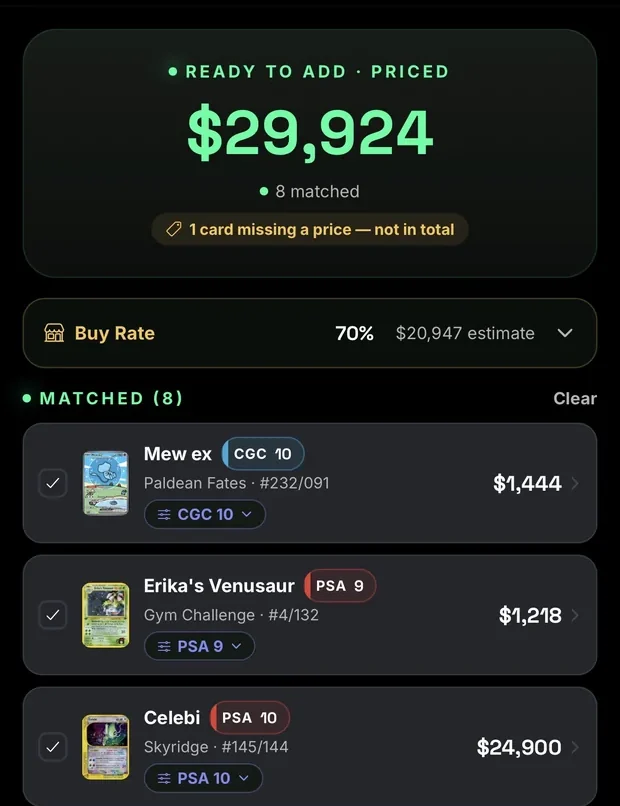
The trade tool for card shows
Know the trade before you make it.
Scan cards, compare both sides, and save the deal. Bartr for iPhone puts card prices in your hand before you agree.
Free on iOS. No account needed.
Sample trade
Illustrative values. Try a dealer rate and watch the receipt update.
My side$0
Their side$0
Dealer buy rate80% · Their Trade
Pick cards to begin
Add at least one card to each side
$0
Free on iOS. No account needed. Free vs Pro
Why Bartr
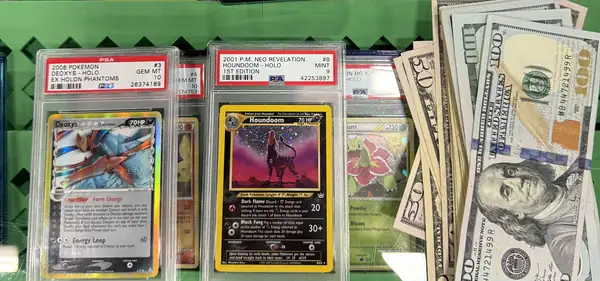
The grade is on the label. The price isn't.
Cards move fast and the person across the table has priced them all week. Bartr puts the same numbers in your hand before you shake on it.
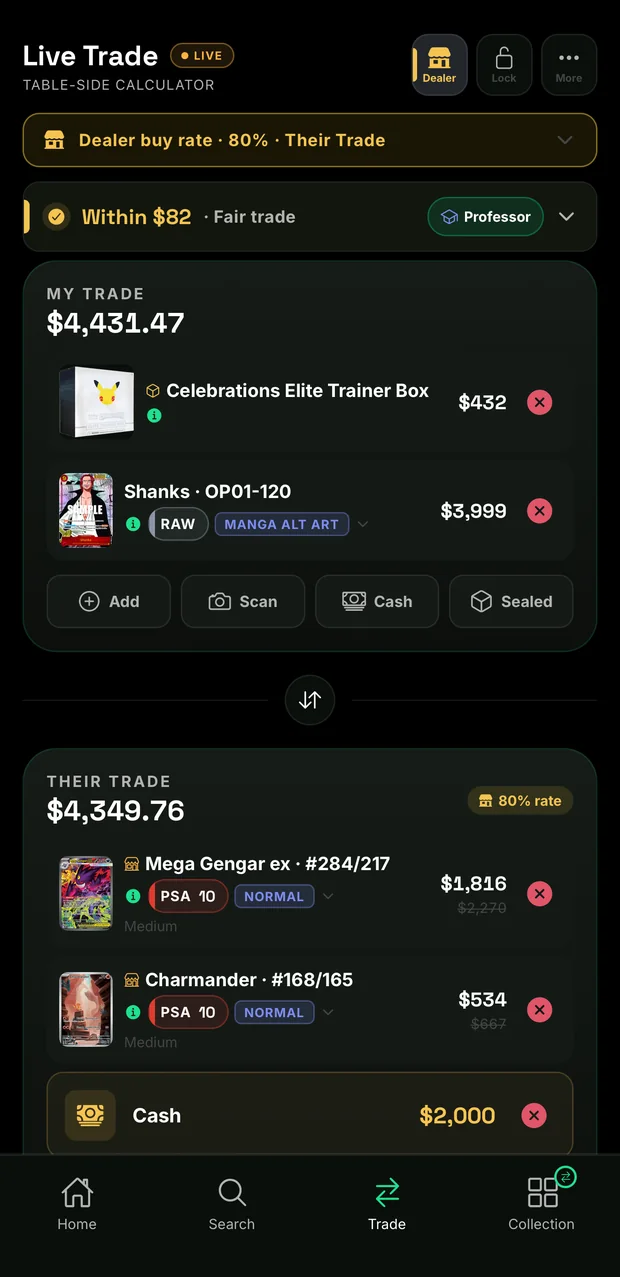
- Know before you agree. Both sides valued, the gap named, and a line telling you whether it is inside the fair band or worth talking about.
- Test the dealer rate. Move the rate and pick which side it applies to. If an offer only works at 70 percent, you will see it.
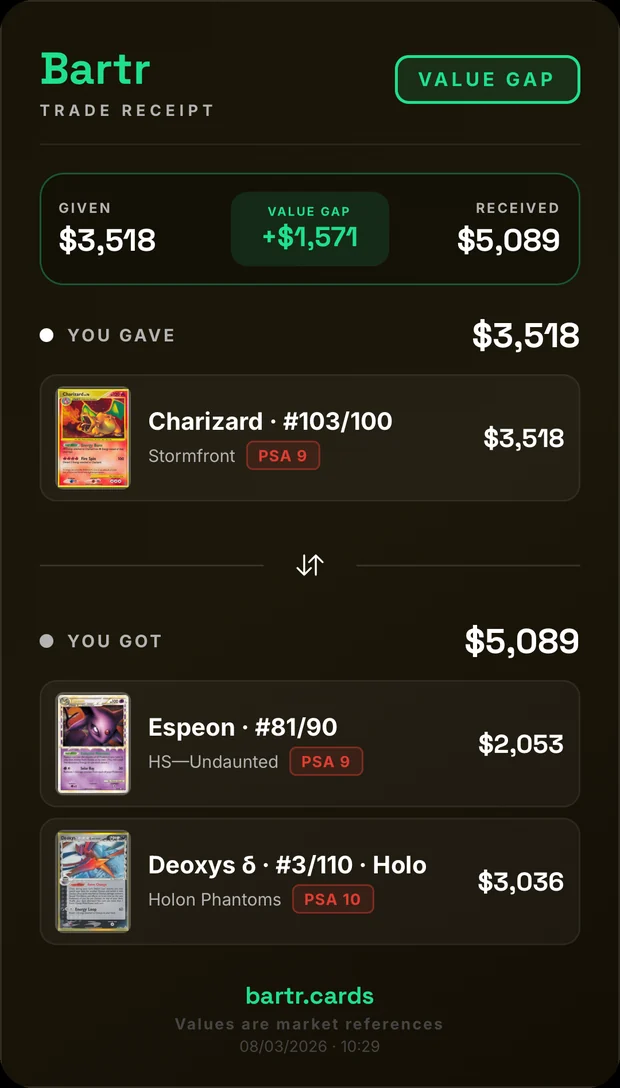
- Keep the receipt. Every trade saved with what you gave, what you got and what it was worth that day. Weeks later you can still check.
- Nothing to take on trust. Prices come from sold-market data, a card without one shows no price instead of a guess, and a cost nobody entered never becomes a zero.
The same job, at the table.
Pokémon, One Piece, and Riftbound. Raw, graded, and sealed where pricing is available.
For vendors
Your table, on a laptop.
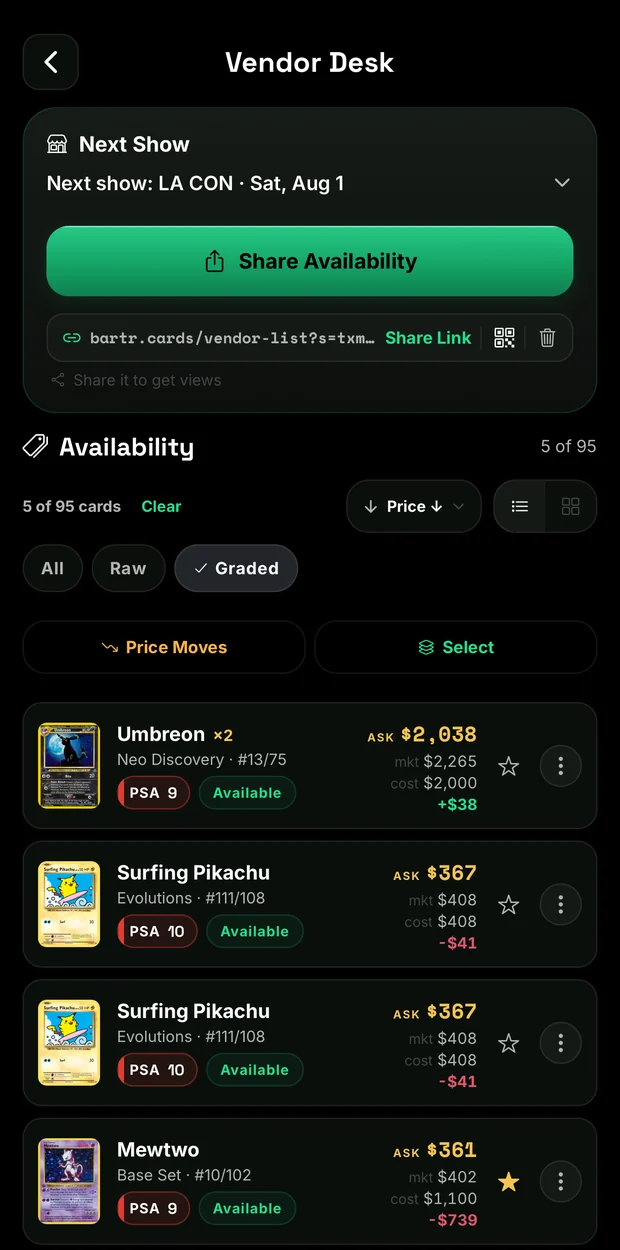
Publish your stock from the app and open it on any bigger screen. Search the whole table, reprice, mark sales as money changes hands, and watch ask against market and cost per card. Your phone stays the source of truth: the desk queues, the phone confirms.
- Three views. List for working a queue, tiles for spotting a card, sheet for reading the whole table at once.
- Margin in the open. Ask, market, cost and margin on every row, and a cost you never entered stays a dash instead of becoming a zero.
- A shareable list. Customers open a live page of what is for sale. No account, no app.
- Works on bad convention wifi. A sale made with no signal is parked and sent when the signal comes back.
Ready for your next trade?
Try Bartr free on iOS. Questions go to support@bartr.cards.